
THE BONGO

The Bongo: A Small Drum with a Big Voice in Afro-Cuban Music
When you hear the crisp, high-pitched pop of the bongo drums in an Afro-Cuban rhythm, you’re not just hearing percussion—you’re hearing the heartbeat of a culture. The bongo, a deceptively simple pair of small drums, plays a central role in Afro-Cuban music and Latin genres around the world. Compact in size, massive in influence, the bongo is an instrument that speaks volumes with every tap.
What Is a Bongo Drum?
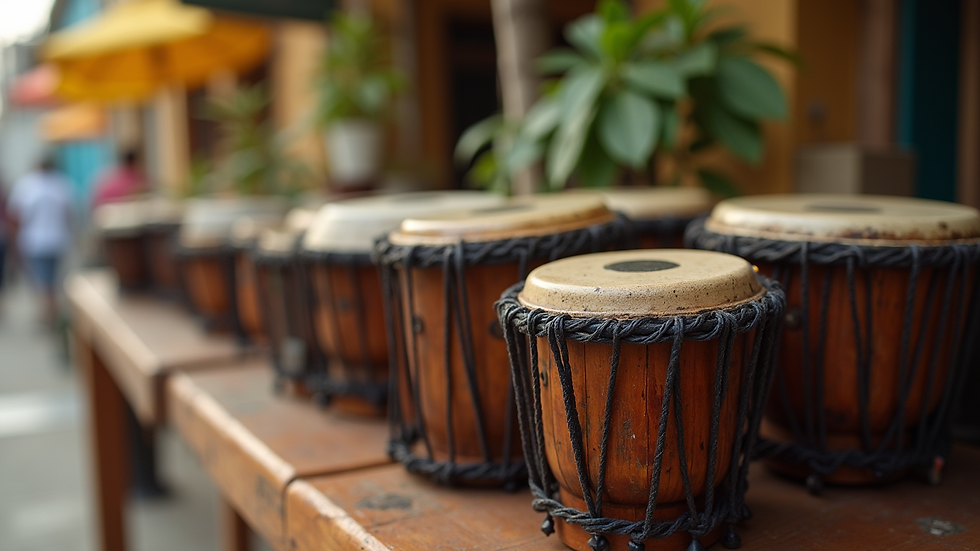
The bongo (or bongó in Spanish) consists of two drums—one smaller (the macho) and one larger (the hembra)—attached side by side. Traditionally made with wooden shells and rawhide heads, they are played with the fingers and palms while held between the knees. Unlike larger hand drums, bongos are designed for quick, sharp articulations—perfect for fast, intricate rhythms.
Afro-Cuban Origins and Cultural Significance
The bongo has its roots in the Eastern regions of Cuba, particularly in the changüí and son music styles of the 19th century. While its design is relatively simple, the instrument evolved as part of Cuba’s rich Afro-Cuban musical fusion—drawing from both African drumming traditions and Spanish influence.
The bongo player, or bongosero, often sits at the center of the rhythm section. In traditional son cubano bands, the bongó is not just about rhythm—it’s a voice, carrying improvisations and call-and-response patterns that drive the music forward.
Techniques and Expression
Playing the bongo is an art of control and flair. Skilled bongoseros use a combination of techniques, including:
Martillo (The Hammer): A basic, rolling rhythm played with a steady hand pattern, forming the core of many traditional Afro-Cuban pieces.
Slaps, open tones, and muted strokes: These create dynamic texture and expressive phrasing.
Improv ("solo de bongó"): In many songs, especially live performances, the bongosero is given space to shine with a burst of improvisation, often stealing the spotlight with fiery solos.
From Cuba to the World
The bongo traveled far from its Cuban roots. In the 20th century, as salsa, Latin jazz, and popular music exploded internationally, so did the bongo. It found its way into New York’s Latin jazz scene, into American rock and pop, and even into hip-hop and electronic music samples.
Legends like Mongo Santamaría, Chico Alvarez, and more recently Richie Flores and Pedrito Martínez have pushed the instrument's boundaries, showing just how expressive and versatile the bongo can be.
Why the Bongo Matters
The bongo represents more than rhythm—it represents connection. It connects African traditions with Caribbean identity, traditional roots with modern innovation, and street performance with high art. Whether in a rumba circle in Havana or a jazz club in Miami, the bongo is a voice of celebration, resistance, and soul.

Fun Fact: The bongo is often the first drum many percussionists learn in Afro-Cuban music. It's portable, approachable, but endlessly complex once you dive into the nuances.


Comments